Most property management websites treat the resident portal as a small link in the top right corner and never think about it again. That habit has a price you can measure. Residents overwhelmingly want a portal, a large share of them still do not have one, and the ones who go without are measurably less happy with the thing that drives satisfaction more than anything else you do.
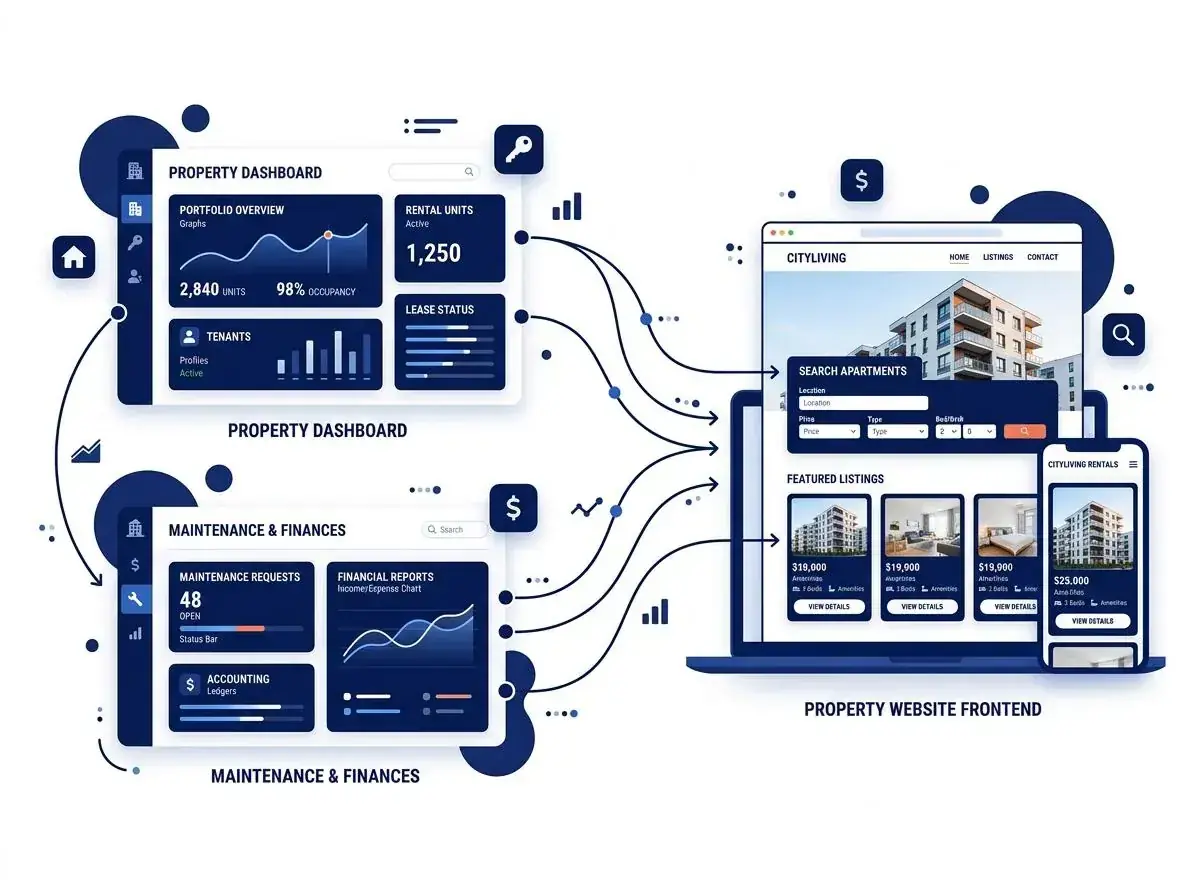
The demand is settled. The supply is not.
AppFolio's 2026 Renter Preferences Report surveyed 3,002 United States renters with demographics aligned to census data. It found that 84 percent of residents prioritize an online portal, while only 59 percent actually have access to one. That is a 25 point gap between what residents expect and what the industry delivers, and it exists at a moment when almost nobody is arguing about whether portals are a good idea.
Buildium's 2025 Renters Report points the same direction from a different angle. Two thirds of renters said a resident portal was at least somewhat important to them, 80 percent said they prefer digital payment methods when given the choice, and 54 percent specifically want the option to pay rent from their phone. The debate about resident demand is over. What is left is an execution problem, and execution is a website problem.
The gap and what it costs
84%
of residents prioritize having an online portal
59%
of residents actually have access to one
$3,872
national average cost of a single apartment turnover
A portal is a retention number, not an IT project
The reason portal access matters is that it sits on top of maintenance, and maintenance is the single largest driver of whether a resident is happy. AppFolio's report identifies maintenance as the number one driver of resident satisfaction, separating satisfied from unsatisfied residents by 91 percent to 63 percent. Residents who have portal access report an 85 percent satisfaction rate with their maintenance experience, against 78 percent for those without it. Same maintenance team, same response times, seven points of difference from how the request gets made and tracked.
That difference lands directly on your renewal rate. In the same report, 39 percent of renters said they plan to move within the next 12 months, up from 35 percent the year before. Satisfied residents said they intend to renew at 55 percent. Unsatisfied residents said 32 percent. Zego's 2026 Resident Experience Management Report puts the national average cost of an apartment turnover at $3,872, with lost rent during vacancy as the largest line item. Every renewal you keep is roughly a $3,872 expense you never incur, and a portal is one of the cheaper ways to influence it.
| Measure | Satisfied residents | Unsatisfied residents |
|---|---|---|
| Plan to renew their lease | 55% | 32% |
| Plan to move within 12 months | 45% | 68% |
| Likely to recommend your company | 84% | 16% |
| Rate maintenance as a satisfaction driver | 91% | 63% |
Look at the recommendation row in particular. An 84 to 16 percent spread is the difference between residents who write you five star reviews and residents who write the other kind. Resident satisfaction is not a soft metric. It feeds your reputation, your reputation feeds your leasing funnel, and the portal is one of the few touchpoints a resident uses every month whether they like it or not.
Where the login actually breaks
When adoption is poor, property managers usually blame residents. The research does not support that. Buildium's senior researcher framed it plainly, that renters already put a high value on portal access, so the real question is how you remove the barriers to using it. In practice those barriers are almost always design decisions made on the website, not resistance from the resident.
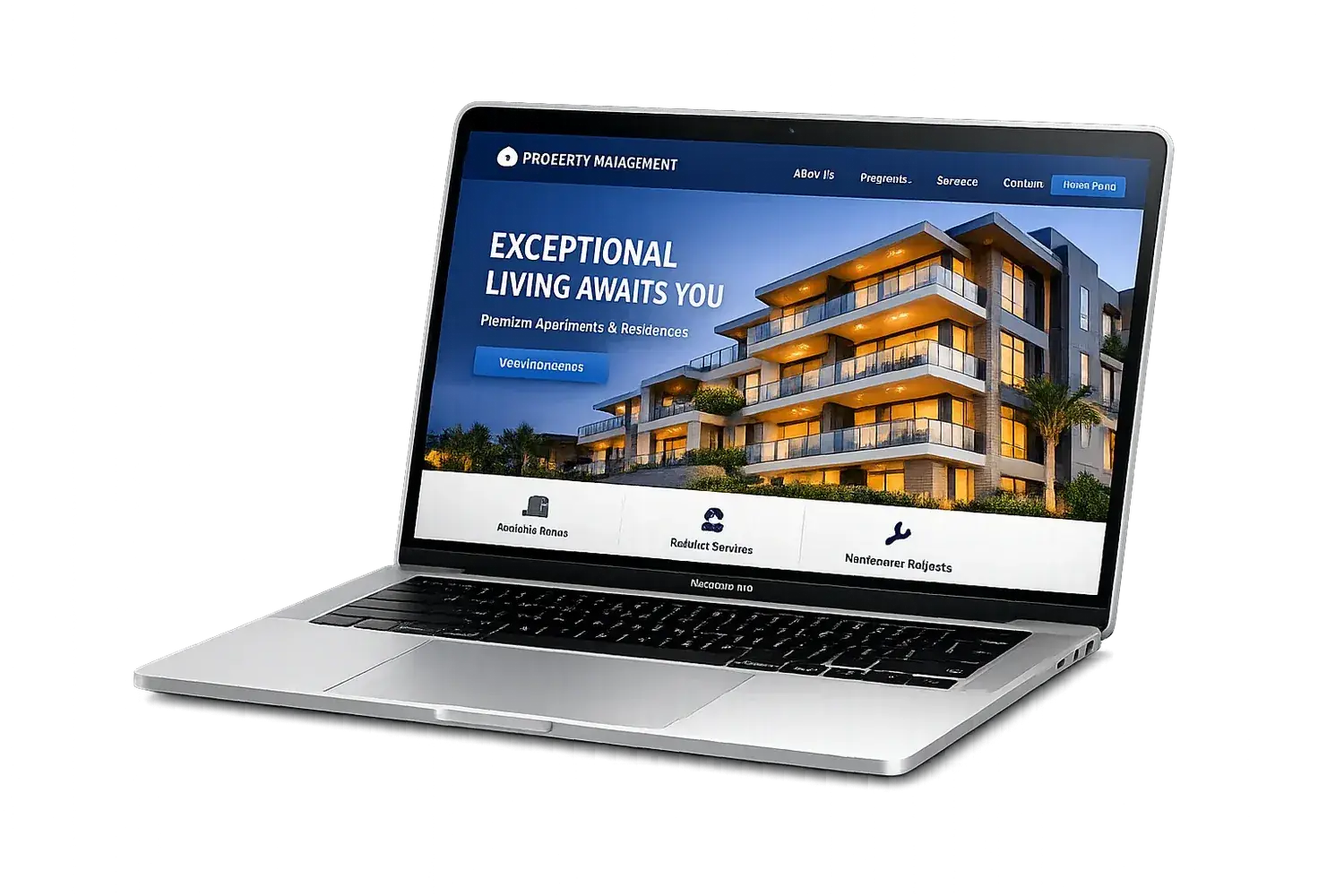
The usual failures are boringly consistent. The login is a 12 pixel link in a crowded header, indistinguishable from Careers and About. The portal link goes to a raw software subdomain with different branding, so residents cannot tell whether they are still dealing with you. There is no path for a first time user, so a resident who has never activated an account clicks Login, fails, and calls the office instead. Password recovery loops back to a page that assumes you already know your username. And the whole thing was designed for a desktop browser that most residents are not using.
Design for the phone, because that is where they are
Buildium's data found 60 percent of residents prefer to use their phones to communicate with their property manager, and 54 percent want to pay rent on that same device. On communication channels, 59.3 percent preferred text and 52.4 percent preferred email, both ahead of logging into a portal to check for messages. That last finding is the one people misread. It does not mean the portal is unnecessary. It means the portal should not be the place residents have to go to find out that something happened.
The pattern that works is push plus pull. Notify by text or email, and make that notification a one tap deep link into the portal for the action itself. Rent is due, here is the link to pay. Your work order was assigned, here is the status. Residents get the immediacy they want on the channel they prefer, and the portal becomes the place where things actually get done rather than a place they are asked to remember to visit.
Speed matters here too. AppFolio found 79 percent of satisfied residents had maintenance issues resolved within a few days or less, while 53 percent of unsatisfied residents reported waiting weeks or more. A portal that makes submitting a request take 30 seconds with photos attached gets you a cleaner queue and a faster first response, which is the part residents grade you on.
Seven fixes that raise adoption
Put Resident Login in the primary navigation
Not the footer, not a dropdown. A visible button in the header on every page, styled as a button so it reads as an action. Add a second entry point on the homepage for residents who never look at headers.
Give first time users their own path
Directly under the login, add Activate your account and a short page explaining what residents need (the email on the lease, usually) and who to contact if it fails. This one link removes a large share of the calls your office takes.
Keep your branding on the portal
Most property management platforms allow a custom subdomain, your logo, and your colors. Configure them. A resident who lands on an unbranded software login is one confused moment away from calling instead of paying.
Test the whole flow on a phone
Log in, pay rent, submit a work order with a photo, and read a document, all on a real phone on cellular data. Anything that requires pinching, zooming, or a desktop is a broken feature, not a minor annoyance.
Notify on the channel they chose, link back to the portal
Text and email beat portal logins for awareness. Send the alert there and deep link into the exact screen. Never make a resident hunt through a dashboard to find what you already know they need.
Publish a portal help page that is public
A page outside the login covering how to pay, how to set up autopay, how to submit a request, and how to reset a password. It deflects phone calls and it ranks for your own residents searching your company name plus portal.
Onboard at move-in, not later
Activation during lease signing, while the resident is already dealing with you, converts far better than an email sent three weeks later. Make portal setup a step in the move-in checklist rather than an optional follow-up.
What to measure once it is live
Track four things. Activation rate, meaning the share of current residents with an active portal account, is the headline number and the one the 59 percent figure should embarrass you into improving. Online payment share tells you whether the portal is replacing checks or just sitting next to them. Share of maintenance requests submitted through the portal rather than by phone shows whether your queue is getting cleaner. And support call volume about the portal itself should fall as the help page and activation path do their work.
There is an operational payoff on your side as well. The Buildium and NARPM 2026 Property Management Industry Report found half of property managers naming new tools, or better use of the tools they already have, as their primary strategy for cutting costs. Most companies are paying for a portal already through their management software. The website is usually the reason residents are not using it.
The bottom line
Residents have made their preference clear, and 84 percent want a portal while only 59 percent have one. The companies closing that gap are not buying different software. They are putting the login where people can find it, branding it so it feels like theirs, building a real path for first time users, making the whole thing work on a phone, and pushing notifications to text and email instead of waiting for residents to check in. Maintenance satisfaction moves, renewal intent moves, and at $3,872 per turnover the arithmetic gets easy fast. It is one of the highest return changes you can make to a property management website, and most of it is a week of work on pages you already own.