
The best property management websites do two jobs at once. They make renters want to live in your units, and they make owners want to hand you their property. We studied what those sites have in common and pulled out seven examples worth copying. Each one is a pattern you can apply to your own site this month.
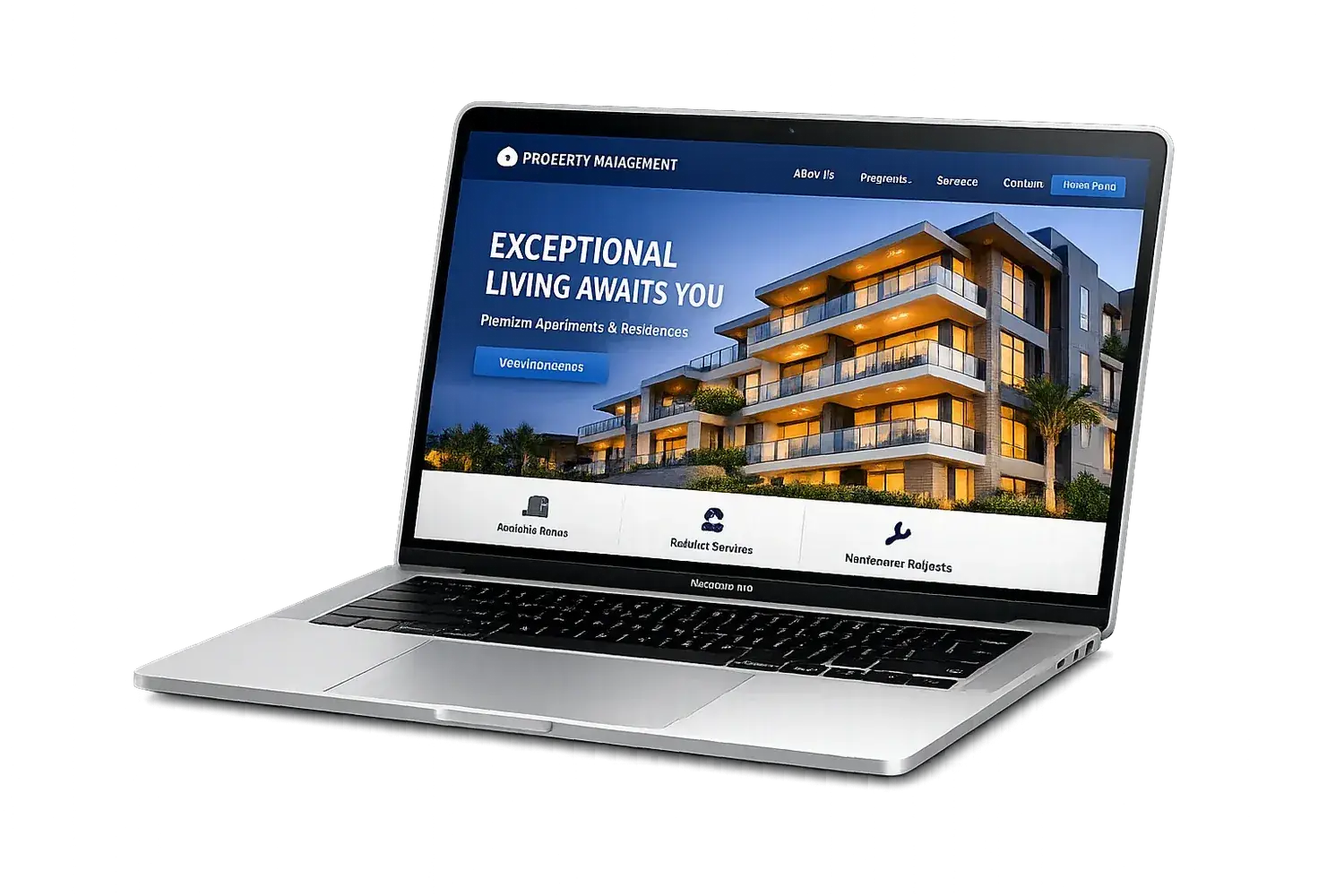
What separates a great PM website from an average one
An average site lists services and a phone number. A great one is built around the two people who pay you: the renter looking for a home and the owner looking for a manager. Every example below serves one or both of them better than a generic template ever could.
Seven examples worth copying
A homepage that names who you serve
The best sites say it in the first line: who they help and where. A renter or owner knows in three seconds they are in the right place. Vague taglines lose both.
Fast, image-light property listings
Top sites load listings in under two seconds, even on a phone. Compressed photos, clean filters, and a clear apply button beat a slow gallery every time.
A separate path for owners
Renters and owners want different things. The strongest sites give owners their own page that speaks to fees, reporting, and peace of mind, with a clear request-a-quote button.
Real photography, not clip art
Authentic photos of real properties and real people build trust. Generic stock illustrations signal that everything else might be generic too.
Trust signals above the fold
Reviews, door counts, years in business, and recognizable software badges. Owners are handing over a major asset, and proof up front is what earns the call.
Mobile-first lead capture
A tap-to-call button, a short inquiry form, and a chat option that work perfectly on a phone. Most visitors arrive on mobile, and that is where leases are won.
Built for search and AI
Structured data, location pages, and FAQ markup so the site ranks in Google and gets cited by ChatGPT, Gemini, and Perplexity when renters ask for recommendations.

Two audiences, one website
The reason most PM sites underperform is that they try to speak to renters and owners with the same words. The best examples keep both in mind and give each a clear path. Here is what each group is actually looking for when they land on your site.
| Renters look for | Owners look for |
|---|---|
| Available units with clear photos and rent | Proof you can fill units quickly |
| An easy way to apply on a phone | Transparent fees and reporting |
| Fast answers to common questions | Reviews and a track record they can trust |
The bottom line
You do not need to copy a competitor to build a website that wins. You need the patterns the best sites share: clarity about who you serve, fast and honest listings, a dedicated path for owners, real photography, trust signals, mobile-first lead capture, and a structure built for search. Apply these seven examples and your site will start working as your best leasing agent and your best sales pitch at the same time.